
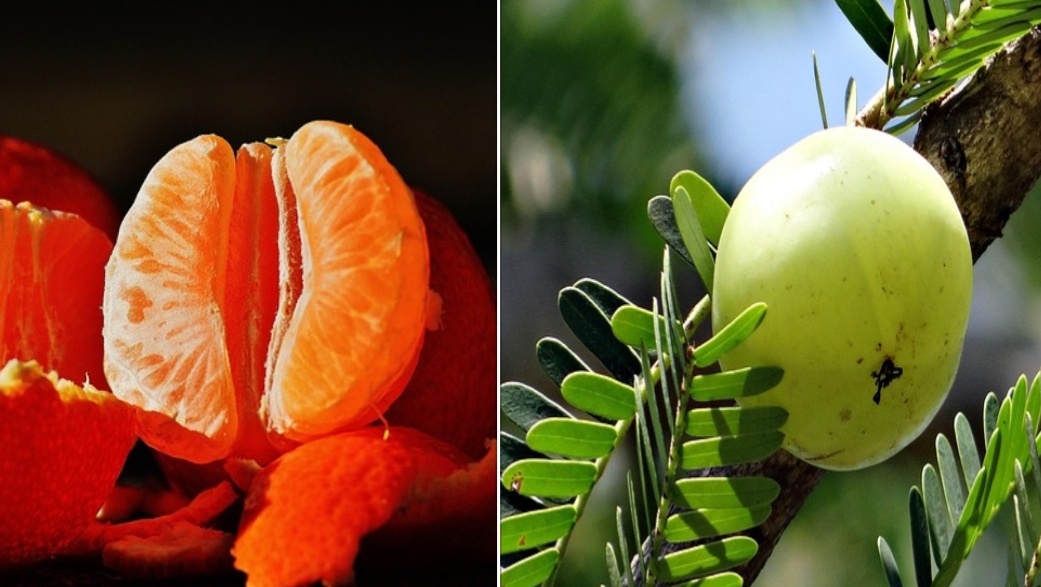
# Orange vs Amla: Which is Better for Weight Loss and Fitness Goals?
When it comes to fruits and weight loss, **Orange and Amla (Indian Gooseberry)** are often compared because both are rich in **Vitamin C, nutrients, and antioxidants**. But if your goal is **fitness or weight loss**, each fruit plays a slightly different role in helping your body shed fat and stay healthy.
Losing weight is not just about **cutting calories**; it’s about eating the **right foods** that improve metabolism, digestion, and keep you full longer. Fruits like Orange and Amla are perfect for this because they are **naturally low in calories** while being **packed with vitamins, minerals, and fiber**.
In this article, let’s compare Orange and Amla to see **which one is better for weight loss**, how they impact your metabolism, digestion, and overall fitness goals.
## 1. Nutritional Profile: Orange vs Amla
Both fruits are powerhouse sources of **Vitamin C**, but their other nutrients differ slightly:
– **Orange:**
 – Low in calories (~62 kcal per 100g)
– High in Vitamin C
– Contains potassium, folate, and antioxidants
– Rich in water content for hydration
– **Amla (Indian Gooseberry):**
– Extremely low in calories (~44 kcal per 100g)
 – Very high in Vitamin C (much higher than Orange)
– Contains calcium, iron, and polyphenols
– Excellent source of fiber
💡 **Takeaway:** Both are nutritious, but Amla is a stronger **Vitamin C and fiber source**, making it slightly more effective for metabolism and fat burning.
## 2. Hydration and Metabolism
**Oranges** have high water content, which helps **keep you hydrated**, reduce cravings, and promote **feelings of fullness**. They also contain natural sugars that give you a quick **energy boost** during workouts or busy days.
**Amla**, on the other hand, is concentrated and may **boost metabolism faster** due to its antioxidants and polyphenols, supporting the breakdown of fat more efficiently.
💡 **Takeaway:**
– Choose **Orange** for hydration and snack control
– Choose **Amla** for faster metabolism and fat oxidation
## 3. Impact on Digestion
Fiber is key to **healthy digestion** and **weight management**:
– **Orange:** Soluble fiber (like pectin) improves digestion, prevents bloating, and maintains blood sugar levels.
– **Amla:** Very rich in fiber and natural digestive compounds. It promotes **regular bowel movements**, improves gut health, and reduces fat accumulation around the waist.
💡 **Takeaway:** Both fruits support digestion, but Amla has a **stronger effect on detoxifying and cleansing** the digestive system.
## 4. Supporting Fat Loss
The **fat-burning potential** depends on how the fruit influences **hormones and metabolism**:
– **Orange:** Helps in **controlling hunger**, reducing snacking, and maintaining energy levels.
– **Amla:** Boosts metabolism, helps burn fat faster, and supports **weight management** over time.
💡 **Tip:** For best results, combine these fruits in your **morning diet** or as **snacks** during the day.
## 5. Which One is Better for Weight Loss?
Both fruits are **excellent for fitness and weight loss**, but your choice depends on **your goals**:
– **Choose Orange** if you want:
– A **hydrating, satisfying snack**
– To control hunger between meals
– Natural energy boost for workouts
– **Choose Amla** if you want:
– **Faster metabolism**
– Stronger fat-burning support
– Detoxifying and cleansing benefits
💡 **Pro Tip:** Including **both fruits** in your diet is ideal. Use **Orange for snacks** and **Amla in juice or as powder** for metabolism support.
## Final Thought
Weight loss is not just about eating fewer calories – it’s about eating **smart foods** that improve metabolism, digestion, and keep you full. Oranges and Amla are both **powerful allies** in your fitness journey. By including them strategically in your diet, you can enjoy the **benefits of hydration, energy, and fat burning**, while also boosting your Vitamin C intake naturally.
Read this also: https://sanjarii.com/foods-that-boost…d-make-you-happy/
Remember, the best results come from a **balanced diet combined with regular exercise and healthy lifestyle habits**.
##Disclaimer:
This article is for **educational purposes only** and should not replace professional medical advice. If you have ongoing health concerns, please consult a qualified healthcare provider. Nutritional needs may vary from person to person.